
India has a huge potential to become a global manufacturing hub, Prime Minister Narendra Modi said.

20 Indian CEOs and 350 companies are participating in the Hannover Fair.

He is expected to invite German companies to invest in India and participate in 'Make in India' initiative
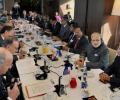
Prime Minister Narendra Modi met top French business leaders with an aim of bringing French investment and technologies to India.
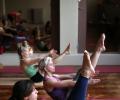
Prime Minister Narendra Modi on Friday launched a portal for the International Day of Yoga in Paris, describing the ancient Indian spiritual practice as capable of awakening a sense of oneness.
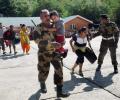
"We are making serious attempts to rescue people marooned in flood waters based on inputs we get from various sources, including people," asserted a top Indian Air Force official overseeing the marathon operations by his force amidst allegations by some people that forces had not reached all the affected people.
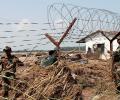
When calamity strikes, it does not discriminate. This was on ample display when floods ravaged Kashmir.
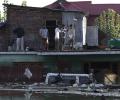
Jama Masjid in Hyderpora area has turned into a major relief centre for those affected by the devastating floods in the Kashmir valley, housing hundreds of people, including women and children.
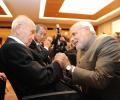
Prime Minister Narendra Modi on Tuesday termed his Japan trip as "very successful" and hoped that India's infrastructure will improve and the country will become clean with the help of $35 billion promised by Japan over five years, the highest ever amount ever.
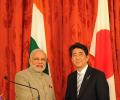
The "understanding" between India and Japan on civil nuclear issue has "improved", Prime Minister Narendra Modi said on Monday, after talks with his counterpart Shinzo Abe even as the much-anticipated remained deal remained elusive.
.jpg)
India and Japan on Monday agreed to enhance their defence and strategic cooperation to a new level during talks between Prime Minister Narendra Modi and his counterpart Shinzo Abe, who also decided to speed up negotiations on civil nuclear deal that could not be concluded now.
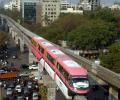
India will get $35 billion from Japan over the next five years for developmental projects, including building of smart cities and next generation infrastructure as also cleaning of the Ganga, as Premier Shinzo Abe on Monday pledged to partner Prime Minister Narendra Modi's "ambitious" vision of inclusive development.
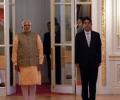
Underlining that a closer and stronger bilateral strategic partnership is indispensable for advancing peace in the world, India and Japan on Sunday decided to promote economic and social development and engage with other nations to address regional challenges and promote peaceful resolution of disputes.
India's economy had recorded a subdued growth of 4.7 per cent in the April-June quarter of the last fiscal, 2013-14.

Prime Minister Narendra Modi on Monday visited an elementary school in Tokyo and mingled with the students, narrating them the story of Lord Krishna.

Modi, who has enjoyed immense reputation in Japan as then Gujarat Chief Minister in terms of ensuring the state's progress, said India wants to emulate Japan in terms of quality, zero defect and delivery systems while carrying out skill development.
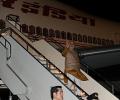
Prime Minister Narendra Modi flew to Tokyo on Sunday for crucial summit talks with his Japanese counterpart Shinzo Abe after an overnight stay in Kyoto where he visited two ancient Buddhist temples with the latter accompanying him in a significant gesture.
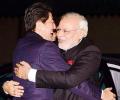
Lauding Japan's deep historical ties with India, Prime Minister Shinzo Abe on Sunday said he was looking forward to a summit meeting with his counterpart Narendra Modi in Tokyo on Monday after the two leaders spent time together in ancient Kyoto city visiting Buddhist temples.
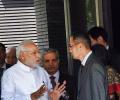
Japan on Sunday agreed to work with India in developing a treatment for the sickle cell anaemia after Prime Minister Narendra Modi sought help for finding remedy to the deadly disease commonly found among tribals in India.
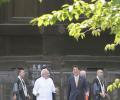
On the second day of his Japan tour, Prime Minister Narendra Modi on Sunday visited two prominent ancient Buddhist temples in Kyoto -- Toji and Kinkakuji -- offering prayers and mingling with the common people and tourists.
